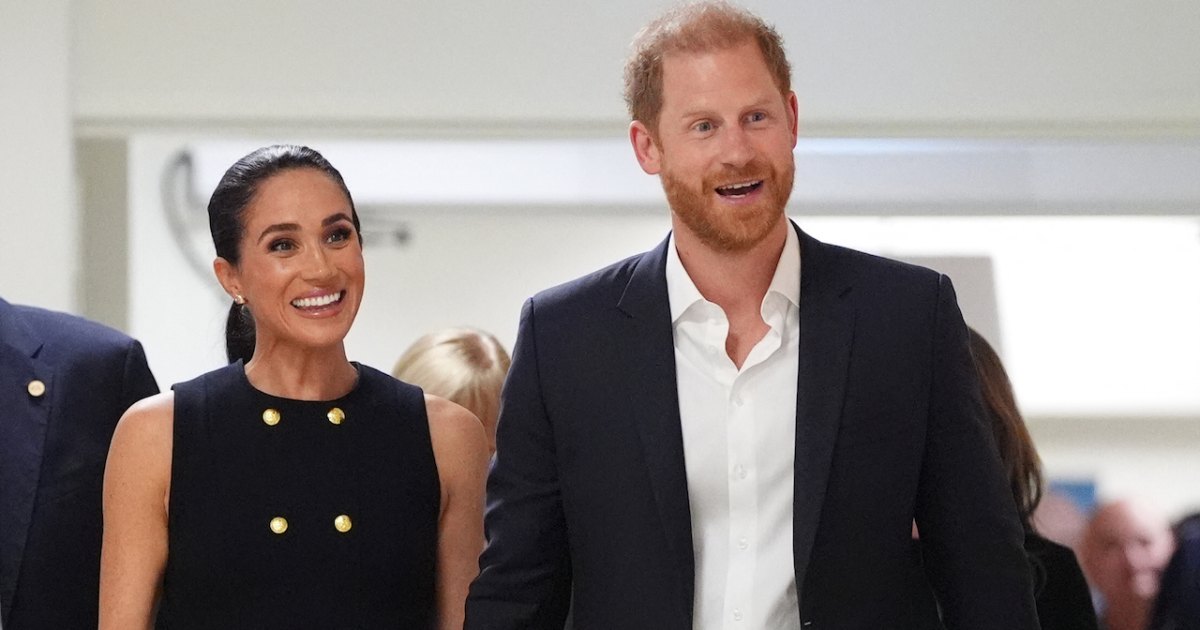
Prince Harry Shares Mental Health Struggles After 2019 Canada Relocation With Meghan Markle
Prince Harry has opened up about his mental health decline, sharing that he slipped into a period of depression after temporarily moving to Canada in 2019.

Prince Harry has opened up about his mental health decline, sharing that he slipped into a period of depression after temporarily relocating to Canada in 2019 with his wife, Meghan Markle, and their then-infant son, Archie. Six years after the Duke and Duchess of Sussex temporarily settled in Vancouver, Canada, as part of their step away from senior royal duties, Harry shared new insight into the emotional hurdles of that transition.
Relocation to Canada and Adjusting to Quiet
During an interview for MasterClass' project titled Redefining Grief: Building Resilience Through Loss, Harry explained the motivation behind the initial move. He noted that the couple sought space away from a high-stress environment to clear their heads and think. However, the sudden absence of constant pressure created an unexpected domestic and psychological hurdle for the prince.
He described feeling largely useless around the house during the adjustment period. Because his mind and body had grown accustomed to operating under high stress, he felt as though he required tension to generate the adrenaline necessary for his brain to function. Without that ongoing stimulation, he recalled slipping into depression for about two weeks, noting that he felt unable to function properly without adrenaline. Following their time in Canada, Harry, Meghan, and Archie relocated to Montecito, California, just four months later.
Connection to Past Trauma and Adrenaline
Harry connected his reliance on adrenaline peaks not only to his 10-year career in the British Army, but more deeply to the emotional toll of the 1997 death of his mother, Princess Diana. He clarified that his post-traumatic stress was not tied to his experiences serving in Afghanistan, but rather acted as a trigger for stored trauma from his past.
He admitted that his adrenaline spikes had previously left him feeling emotionally numb. For a long time, Harry feared that seeking healing or a fix for his trauma might cause him to lose his connection to his mother. He explained that he felt a sense of guilt and disloyalty at the prospect of experiencing joy or happiness without her, believing he needed to remain sad or emotionally numb to prove how much he missed her.
Shifting Perspective on Healing
Over time, his perspective on processing his loss shifted profoundly. He ultimately realized that his mother would have only wanted him to be happy, a discovery that he described as freeing. Through working through these challenges, the 42-year-old learned how his nervous system and body react to different situations.
Recognizing the specific signs of an adrenaline surge allows him to identify triggers and understand which everyday situations do not actually require a high-stress response. The Duke of Sussex shares two children with Meghan—Archie, now 7, and daughter Lilibet, 5—and the family recently traveled back to England in September without resuming royal responsibilities.
The reflections shared by Prince Harry offer a candid look at the complex relationship between high-stress environments, unaddressed trauma, and the nervous system. By speaking out about his transition to North America and his journey toward emotional resilience, the duke continues to highlight the importance of understanding personal mental health triggers and seeking long-term healing.
Original reporting and related coverage
Publisher links and additional coverage used for this story.